

At Eco Fashion Week Africa (EFWA), emerging designers are learning how to design for a better world. The “No New Clothes” runway challenge invites fashion students and young creatives across Africa to rethink what it means to be innovative, sustainable, and intentional in an industry often defined by speed and excess.
For student designers like Ashley Njeri, founder of Miss Njeri Fashion House, EFWA is a a catalyst. Her journey reflects the deeper work EFWA is doing across the continent: offering a platform that is not rushed but driven by the thirst for positive impact.
Ashley shares how EFWA became part of her personal and professional growth:
Q: What inspired you to take part in the Eco Fashion Week Africa (EFWA) “No New Clothes” competition?
I attended the first Eco Fashion Week Africa just two months into fashion school, and I absolutely loved it. There was something deeply poetic about transforming materials that were discarded or considered waste by the market into something beautiful and meaningful. I was inspired by the pieces my classmates created during their challenge created by Eco Fashion Week Africa founders, and I even got to volunteer as a model for the designer who ended up winning. The whole experience left a strong impression on me, and I knew I wanted to be part of the next one not just as a supporter, but as a creator.Q: How would you describe the experience of conceptualizing and creating your collection for EFWA?
I already had a clear vision. The inspiration, the colours, the designs were all sitting with me from the beginning. But the real challenge was having the confidence to trust that vision. My mind kept second-guessing: Is this good enough? Should I make it more raw? More vulnerable? It was a constant back-and-forth. But at the core of it all, I’m a Christian designer, and creating from that place is deeply personal. It’s who I am. So being able to express that on the runway felt like a win in itself. Whether or not I walked away with a prize, I walked in truth and that, to me, is the real victory.Q: In what ways has participating in EFWA influenced your journey and growth as a fashion designer?
It really challenged me in the best way. It showed me that I can tell a meaningful, beautiful story even from the bare minimum. I worked with offcuts, thrifted curtains, and second-hand pieces. It was tough but incredibly rewarding. This was also my most work-intensive and deeply personal collection to date, so being able to be gifted a big platform to showcase meant everything. That’s the kind of hope every designer needs. The hope that Eco Fashion Week Africa gave me that your work is worthy of being seen, and that your voice deserves to be heard.Q: What moment or message stood out to you most during the “No New Clothes” runway showcase?
What stood out most to me was the message that fashion doesn’t have to be new to be powerful. Watching the runway, I was reminded that creativity isn’t limited by material, It thrives in constraint. There was something deeply moving about seeing designers from different backgrounds turn discarded fabric into storytelling pieces. This show reminded me that purpose and intention can shine brighter than trends. That moment, for me, affirmed that fashion can be redemptive, can carry meaning, faith, and sustainability all at once.
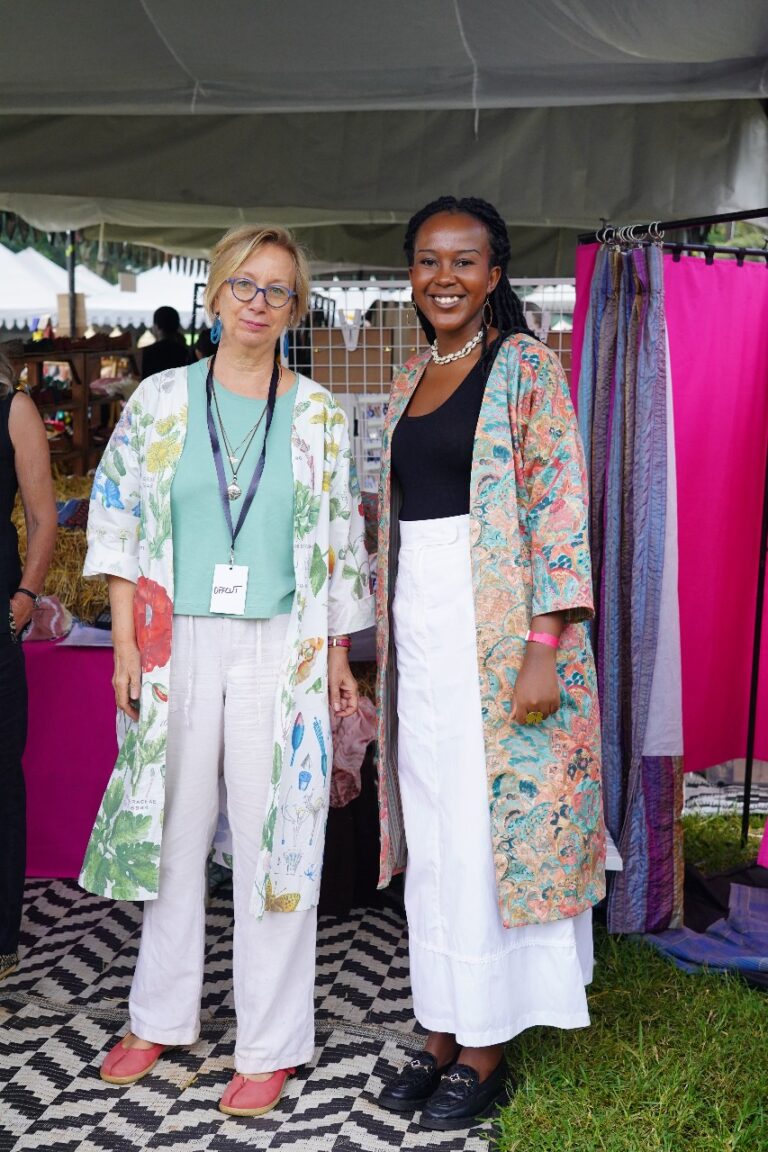
Q: As the second runner-up at EFWA No New Clothes Challenge, you earned an internship with a seasoned brand Off Cut. How has that journey been for you so far?
It’s been such an interesting and insightful journey. In fashion, there’s always something new to learn and I definitely learned a lot. I’m truly grateful to EFWA for this platform and honoured that Off Cut took me in, poured into me, refined my skills, and exposed me to the realities of the industry. One of the biggest takeaways was seeing sustainability not just as an art form, but as a viable, impactful business. That perspective really shaped how I view fashion going forward.Q: How has your perception of upcycled fashion evolved since joining Eco Fashion Week Africa and working with Off Cut? Upcycling, to me, has become a necessity. There is a market for it, and it’s growing. I now see a future where East Africa becomes a haven for sustainable fashion and exceptional craftsmanship. With all the support and momentum this space is receiving, I believe East Africa will soon stand as a global beacon of sustainability in fashion. And honestly, I can’t wait to be part of that movement.
Ashley’s story is one among many that reflect our broader mission to nurture design with meaning and to equip the next generation with tools that go beyond aesthetics.
Through workshops, mentorships, and a continent-wide runway challenge, EFWA is helping young designers and women in rural community in connecting creativity to impact by integrating the principles of the United Nations Sustainable Development Goals (SDGs).
Our work contributes directly to the following SDGs:
-
SDG 12: Responsible Consumption and Production
By encouraging designers to use second-hand, discarded, or offcut materials, EFWA challenges the fashion industry’s throwaway culture. Designers are taught to work with what already exists, reducing waste and inspiring new ways to approach production. -
SDG 4: Quality Education
EFWA works closely with fashion schools and training institutions to deliver practical experiences in sustainable design. Our mentorships and internships, like the one Ashley completed at Off Cut, serve as a bridge between education and industry. -
SDG 8: Decent Work and Economic Growth
Through partnerships and runway exposure, designers gain access to opportunities that help turn sustainable design into a source of livelihood. The program is building pathways for young designers to thrive in ethical, circular fashion economies. -
SDG 13: Climate Action
Fashion contributes significantly to global emissions. EFWA’s commitment to zero-waste practices and education around the environmental costs of fashion ensures that climate consciousness is embedded into every level of design.
Eco Fashion Week Africa moves differently because it is not in pursuit of trend, but of long-term change. We are guided by the belief that African fashion in its resourcefulness, cultural significance, and regenerative potential can lead the way in reshaping the industry globally.
We invite institutions, brands, and individuals who believe in that vision to partner with us in deepening our community impact and expanding our reach.
To read more about our runway challenge and how you can collaborate with us, visit:
eco fashion week africa.com/no-new-clothes-runway-challenge/
eco fashion week africa.com/community-impact-partnerships/
No responses yet