
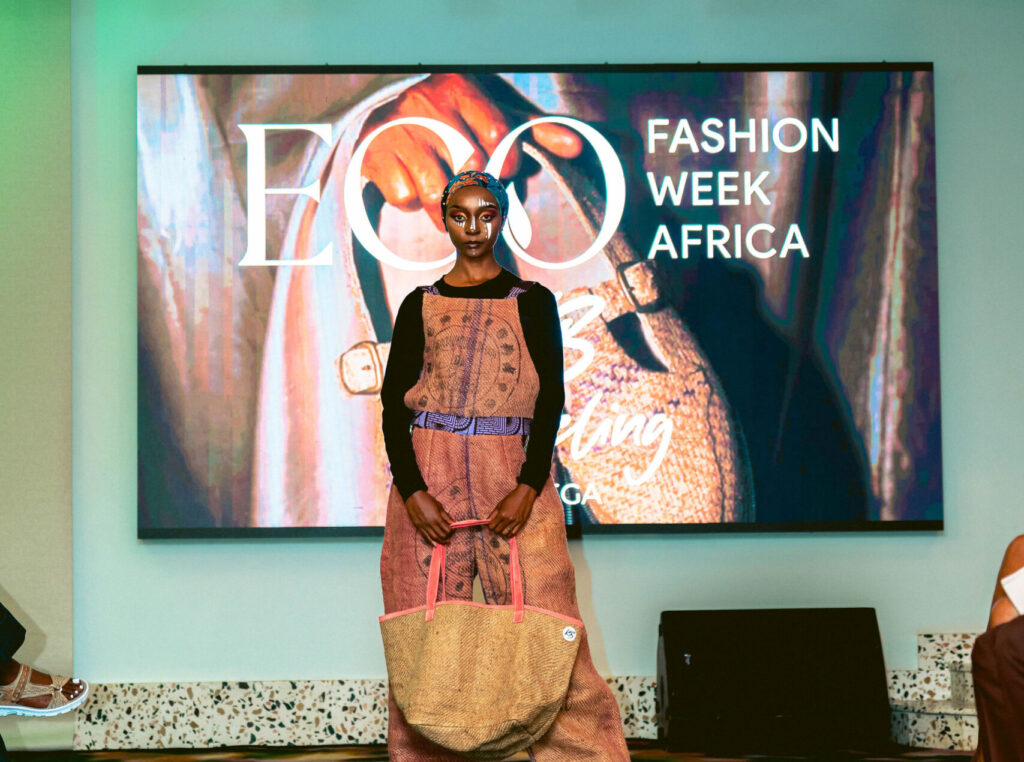
EFWA Season. 3: Week at a Glance
Saturday, 1st November – Kampala: The official kickoff at the Emin Pasha Hotel highlighted local designers and artisan networks, including Brenda At Handcrafts, Crochet Savvy, D-Mwe, Green Amba, Lulungi Couture, Night in Kampala, Our Roots Movement, Priscie B, S. Official, SAWE Creations, and Stand Out Africa.
The runway celebrated diverse models of various backgrounds, abilities, and body types, reinforcing EFWA’s unwavering commitment to inclusivity.
With over 100 attendees from across Uganda, the event also featured a panel discussion with Uganda’s top fashion and sustainability voices and a keynote address by Dr. Obed Akampumuza, who explored how creativity, culture, and sustainability are shaping the future of African fashion.
Tuesday, 4th November – International Panel: Eco Fashion Week Africa hosted a virtual session themed “More Than Clothes: Culture, Circularity & the Purpose-Driven Power of African Fashion.”
Moderated by Belinda Atieno, the panel featured Ruth Anyango (Co-founder of EFWA & Founder of Dolly The Seamstress), Nina Gbor (Circular Economy & Sustainable Fashion Expert), Sothini Shaba (Founder, Tlellifah Footwear & COO, Connect Me), and Harriet Hala (Ugandan-born fashion designer and cultural advocate).
Together, they explored how culture, purpose, and innovation continue to shape the next chapter of sustainable African fashion.
Wednesday, 5th November – Nairobi: A community clean-up in Kibera, in partnership with GEM Forest MGallery, engaged local youth, residents, and volunteers in promoting environmental responsibility and highlighting the link between sustainable fashion and ecological care—showing how fashion communities can actively contribute to greener urban spaces and SDG partnerships.
Thursday, 6th November – Nairobi:
Youth Day at Delight Fashion School offered workshops, mentorship, and a clothing swap experience to promote circular fashion.
Young creatives gained hands-on skills and innovative insights on integrating sustainability into design and production—guided by experienced African designers and artisans.
Friday, 7th November – Nairobi:
The Sister Speaks event spotlighted women designers and entrepreneurs through panels and networking sessions, encouraging conversations on inclusive and ethical fashion practices. The dialogue underscored the essential role of women in driving both creative excellence and sustainable leadership across the continent’s fashion ecosystem.
Saturday, 8th November – Nairobi:
The main runway showcase at Gem Forest MGallery Collection featured inclusive presentations with models of diverse abilities and body types, Indian-inspired designs celebrating Africa’s multicultural heritage, and panel discussions on sustainability and design innovation.
The lineup included, JOKENIA DESIGNS, KB UPCYLING, Q ATELIER, STAND OUT AFRICA, GREEN AMBER, MAKASI, EVA WAMBUTU , HERO CLOTH LINE, and NGAMANI
Building on the success of Volumes 1 and 2, EFWA continues to set the benchmark for sustainable and inclusive fashion in Africa. Through upcycling, reusing, and reimagining garments, the movement has sparked a ripple effect, inspiring other fashion weeks across the continent to adopt eco-conscious narratives.
“Eco Fashion Week Africa has always been about reshaping conversations in fashion shows we create, what we consume, and the meaning behind every piece we wear. Sustainability is not just about materials; it’s about responsibility, collaboration, and empowering communities. This year, we included everyone on the runway because we all wear clothes and we get less representation of people with disabilities.”
Global:
The fashion industry produces 92 million tonnes of textile waste annually, contributing around 8% of global greenhouse gas emissions — yet only 12% of discarded clothing is reused. EFWA promotes global awareness of circular fashion by aligning with the UN Fashion and Lifestyle Network and UN Sustainable Development Goals (SDGs 1, 5, 12, 13, 14, and 17), sharing best practices, and amplifying African stories of sustainable design.
Africa:
Africa receives nearly 46% of the EU’s used textiles, much of which is low-quality and unsellable, creating environmental and economic challenges. EFWA addresses this by educating designers and consumers, hosting sustainable fashion showcases, inclusive runways, and community campaigns that champion upcycling and conscious consumption.
Kenya:
Kenya imports about 500 containers of second-hand clothing every month, valued at roughly KES 38.5 billion ($298 million) in 2023, with unsellable items contributing heavily to landfill waste. EFWA empowers Kenyan designers, artisans, and students through workshops, clean-ups, and eco-fashion events that demonstrate circular practices, elevate local talent, and inspire communities to rethink the lifecycle of garments.
Eco Fashion Week Africa Vol. 3 has shown that a circular fashion future is not only possible, it is essential.
By scaling its mission across borders, EFWA has set a new standard for sustainable fashion, inclusivity, and community-driven impact in Africa.
Today, EFWA extends an open invitation to designers, organizations, students, and fashion enthusiasts to join the movement, embrace circularity, and co-create an African fashion industry that is bold, ethical, and unstoppable.
About Eco Fashion Week Africa
Eco Fashion Week Africa (EFWA) is Africa’s leading zero-waste fashion movement, championing sustainable, circular, and ethical practices. We empower designers, artisans, and communities to repair, reuse, and reimagine fashion.
Through initiatives like the No New Clothes Runway, workshops, and exhibitions, EFWA drives creativity, inclusivity, and environmental responsibility, directly supporting the UN Sustainable Development Goals (SDGs 1, 5, 12, 13, 14, and 17).
More photos on https://drive.google.com/drive/folders/1wGT4Ph6wTQ_z-_3BwDyZeKXrECFx-SIE?usp=share_link AND
https://danielkempf-seifriedphotography11.pixieset.com/ecofashionweeknairobi/